Standing Desk for Back Pain: Do They Really Help?
- Peter P
- 21 hours ago
- 4 min read

If you spend most of your day sitting at a desk, you've probably wondered whether a standing desk could finally be the solution to your back pain. They're often promoted as a healthier alternative to sitting, but do they actually reduce low back pain?
The short answer is they can help—but probably not for the reason most people think.
As an osteopath, one of the most common misconceptions I see is people trying to find the "perfect" posture or workstation. In reality, your body usually benefits far more from regular movement than from staying in one position, whether that's sitting or standing.
In this article, we'll explore what the research says, how to use a standing desk effectively, and practical strategies that may help reduce back pain while working.
Myth: Standing Is Better Than Sitting
Many people believe standing is always healthier than sitting.
The reality is that both sitting and standing become problematic when done for too long.
The body generally responds better to variation than perfection.
Does a Standing Desk Reduce Low Back Pain?
Standing desks have become increasingly popular as a way to reduce low back pain, but do they actually work?
The short answer is they can help—but they're not a cure-all.
Current research suggests that sit-stand desks may provide a modest reduction in low back discomfort for some office workers, particularly when they encourage people to regularly alternate between sitting and standing. However, the improvements are generally small and vary considerably between individuals.¹²
Perhaps the most important finding is that standing all day is not better than sitting all day. Both prolonged sitting and prolonged standing can contribute to discomfort, stiffness and muscle fatigue when maintained for extended periods.³
Rather than focusing on finding the "perfect" position, the evidence consistently points towards regular movement and changing positions throughout the day. A sit-stand desk can be a useful tool because it encourages this variation, helping to reduce the prolonged loading that occurs when remaining in one posture for hours at a time.
This closely reflects how I approach low back pain in the clinic. Rather than simply recommending a standing desk, I encourage people to create opportunities to move more frequently, whether that's alternating between sitting and standing, taking short walking breaks, or incorporating simple exercises into their workday. For many people, these habits are likely to have a greater impact than the desk itself.
References
Agarwal S, Steinmaus C, Harris-Adamson C. Sit-stand workstations and impact on low back discomfort: a systematic review and meta-analysis. Ergonomics. 2018.
Ognibene GT, Torres W, von Eyben R, Horst KC. Impact of a Sit-Stand Workstation on Chronic Low Back Pain: Results of a Randomized Trial. Journal of Occupational and Environmental Medicine. 2016.
De Carvalho D, Soave D, Ross K, Callaghan JP. Does objectively measured prolonged standing for desk work result in lower ratings of perceived low back pain than sitting? A systematic review. Work. 2020.
Standing vs Sitting
When comparing standing vs sitting posture, it’s important to understand the effects of each on your body:
Prolonged Sitting
Sitting for hours without breaks can increase pressure on spinal discs and reduce circulation. This often leads to muscle stiffness and increased pain sensitivity in the lower back.
Prolonged Standing
Standing all day can cause muscle fatigue, especially in the legs and lower back. It may also increase pressure on the feet and joints, leading to discomfort.
Alternating Sitting and Standing
Switching between sitting and standing every 30 to 60 minutes helps distribute the load on your spine and muscles. This approach reduces fatigue and encourages better circulation, which can ease low back pain.
Alternating sitting and standing is widely recommended in office ergonomics as the best desk setup for back pain relief. It allows your body to avoid the negative effects of staying in one position for too long.
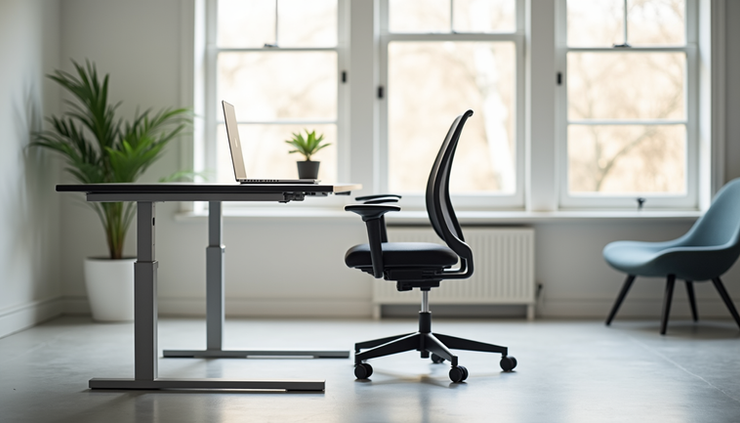
Why Movement Matters More Than Posture
Many people focus on finding the perfect posture to relieve back pain, but movement is actually more important. Here’s why:
Tissue Loading
Holding any posture for a long time places continuous load on muscles, ligaments, and spinal discs. This can cause irritation and pain.
Changing Positions
Regularly shifting your posture helps distribute these loads, giving tissues a chance to recover.
Muscle Fatigue
Staying still tires muscles, which reduces their ability to support your spine properly.
Pain Sensitivity
Movement stimulates blood flow and reduces stiffness, which lowers pain sensitivity.
Instead of aiming for a perfect standing vs sitting posture, focus on moving frequently. Simple actions like stretching, walking short distances, or changing your desk height can make a big difference.
How to Use a Standing Desk Properly
If you decide to try a standing desk for back pain, here are some practical tips to get the most benefit:
Start Slowly
Begin by standing for 15 to 30 minutes at a time, then sit again. Gradually increase standing time as your body adapts.
Adjust Desk Height
Your desk should be at elbow height when standing, allowing your arms to rest comfortably with shoulders relaxed.
Use an Anti-Fatigue Mat
Standing on a cushioned mat reduces pressure on your feet and legs.
Wear Supportive Shoes
Avoid standing barefoot or in unsupportive footwear.
Keep Your Screen at Eye Level (Top 1/3)
This helps maintain a neutral neck position and reduces strain.
Alternate Positions Regularly
Change between sitting and standing every 30 to 60 minutes.
Incorporate Movement Breaks
Take short walks or stretch every hour to reduce muscle stiffness.
Listen to Your Body
If standing causes pain or fatigue, sit down and rest. A standing desk is one tool among many for managing low back pain.
Key Takeaways
Standing desks may reduce low back discomfort for some people.
Standing all day is unlikely to be better than sitting all day.
Changing positions regularly is usually more important than maintaining one posture.
Exercise and regular movement remain among the most effective ways to support long-term back health.
If your symptoms persist, a thorough assessment can help identify the factors contributing to your pain.
Learn more about our Low Back Pain Treatment in Yarraville.
Ready to Get Back to Moving Comfortably?
Most episodes of low back pain improve with the right combination of movement, education and appropriate treatment.
If your symptoms are persisting or preventing you from doing the things you enjoy, I'd be happy to help.
My clinic is conveniently located in Yarraville, with patients regularly travelling from Seddon, Kingsville, Footscray, Spotswood, Newport and Williamstown for personalised osteopathic care.
Book your appointment online today.


